



Initialising ...
Initialising ...
Initialising ...
Initialising ...
Initialising ...
Initialising ...
Initialising ...
 Al

Higashinaka, Ryuji*; Iwami, Takuma*; Saito, Kosuke*; Ito, Takashi; Tabata, Chihiro; Kaneko, Koji; Ohara, Takashi; Kiyanagi, Ryoji; Nakao, Akiko*; Nakamura, Jumpei*; et al.
Journal of the Physical Society of Japan, 95(6), p.063702_1 - 063702_5, 2026/06
Times Cited Count:0 Percentile:0.00(Physics, Multidisciplinary)
 ions
Shiina, Yoko*; Kinoshita, Ryo*; Funada, Shuhei*; Matsuda, Makoto; Imai, Makoto*; Kawatsura, Kiyoshi*; Sataka, Masao*; Sasa, Kimikazu*; Kaneko, Toshiaki*; Tomita, Shigeo*
Physical Review A, 110(6), p.062826_1 - 062826_7, 2024/12
Times Cited Count:1 Percentile:0.00(Optics)Ichikawa, Tsubasa*; Hakoshima, Hideaki*; Inui, Koji*; Ito, Kosuke*; Matsuda, Ryo*; Mitarai, Kosuke*; Miyamoto, Koichi*; Mizukami, Wataru*; Mizuta, Kaoru*; Mori, Toshio*; et al.
Nature Reviews Physics (Internet), 6(6), p.345 - 347, 2024/06
Times Cited Count:19 Percentile:98.39(Physics, Applied)Sakakibara, Ryotaro*; Bao, J.*; Yuhara, Keisuke*; Matsuda, Keita*; Terasawa, Tomoo; Kusunoki, Michiko*; Norimatsu, Wataru*
Applied Physics Letters, 123(3), p.031603_1 - 031603_4, 2023/07
Times Cited Count:10 Percentile:55.63(Physics, Applied)We here report a step unbunching phenomenon, which is the inverse of the phenomenon of step bunching. When a 4H-SiC (0001) surface is annealed at a high temperature, step bunching arises due to the different velocities of the step motion in adjacent steps, resulting in steps with a height of more than several nanometers. We found that the bunched steps, thus, obtained by hydrogen etching in an Ar/H atmosphere were "unbunched" into lower height steps when annealed subsequently at lower temperatures. This unbunching phenomenon can be well explained by the consequence of the competition between energetics and kinetics. Our findings provide another approach for the surface smoothing of SiC by hydrogen etching and may give significant insight into the application of SiC power devices and two-dimensional materials growth techniques in general.
 C thin film
Norimatsu, Wataru*; Matsuda, Keita*; Terasawa, Tomoo; Takata, Nao*; Masumori, Atsushi*; Ito, Keita*; Oda, Koji*; Ito, Takahiro*; Endo, Akira*; Funahashi, Ryoji*; et al.
Nanotechnology, 31(14), p.145711_1 - 145711_7, 2020/04
Times Cited Count:12 Percentile:45.91(Nanoscience & Nanotechnology)We show that boron-doped epitaxial graphene can be successfully grown by thermal decomposition of a boron carbide thin film, which can also be epitaxially grown on a silicon carbide substrate. The interfaces of BC on SiC and graphene on BC had a fixed orientation relation, having a local stable structure with no dangling bonds. The first carbon layer on BC acts as a buffer layer, and the overlaying carbon layers are graphene. Graphene on BC was highly boron doped, and the hole concentration could be controlled over a wide range of 2 10
 to 210
 cm
 . Highly boron-doped graphene exhibited a spin-glass behavior, which suggests the presence of local antiferromagnetic ordering in the spin-frustration system. Thermal decomposition of carbides holds the promise of being a technique to obtain a new class of wafer-scale functional epitaxial graphene for various applications.
 -electron state of the heavy fermion superconductor NpPd
 Al
 and the isostructural family
Metoki, Naoto; Aczel, A. A.*; Aoki, Dai*; Chi, S.*; Fernandez-Baca, J. A.*; Griveau, J.-C.*; Hagihara, Masato*; Hong, T.*; Haga, Yoshinori; Ikeuchi, Kazuhiko*; et al.
JPS Conference Proceedings (Internet), 30, p.011123_1 - 011123_6, 2020/03
Rare earths (4) and actinides (5) provide variety of interesting states realized with competing interactions between the increasing number of electrons. Since crystal field splitting of many-body electron system is smaller than the bandwidth, (1) high resolution experiments are needed, (2) essentially no clear spectrum with well defined peaks is expected in itinerant Ce and U compounds, and (3) Np and Pu is strictly regulated. Therefore, systematic research on magnetic excitations by neutron scattering experiments of localized compounds and rare earth iso-structural reference is useful. We describe the electron states of heavy electron compounds NpPdAl and actinide and rare earth based iso-structural family.
ionsShiina, Yoko*; Kinoshita, Ryo*; Funada, Shuhei*; Matsuda, Makoto; Imai, Makoto*; Kawatsura, Kiyoshi*; Sataka, Masao*; Sasa, Kimikazu*; Tomita, Shigeo*
Nuclear Instruments and Methods in Physics Research B, 460, p.30 - 33, 2019/12
Times Cited Count:3 Percentile:24.53(Instruments & Instrumentation)Abe, Mitsushi*; Bae, S.*; Beer, G.*; Bunce, G.*; Choi, H.*; Choi, S.*; Chung, M.*; da Silva, W.*; Eidelman, S.*; Finger, M.*; et al.
Progress of Theoretical and Experimental Physics (Internet), 2019(5), p.053C02_1 - 053C02_22, 2019/05
Times Cited Count:212 Percentile:99.42(Physics, Multidisciplinary)This paper introduces a new approach to measure the muon magnetic moment anomaly 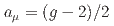 and the muon electric dipole moment (EDM)
 at the J-PARC muon facility. The goal of our experiment is to measure
 and using an independent method with a factor of 10 lower muon momentum, and a factor of 20 smaller diameter storage-ring solenoid compared with previous and ongoing muon g-2 experiments with unprecedented quality of the storage magnetic field. Additional significant differences from the present experimental method include a factor of 1000 smaller transverse emittance of the muon beam (reaccelerated thermal muon beam), its efficient vertical injection into the solenoid, and tracking each decay positron from muon decay to obtain its momentum vector. The precision goal for is a statistical uncertainty of 450 parts per billion (ppb), similar to the present experimental uncertainty, and a systematic uncertainty less than 70 ppb. The goal for EDM is a sensitivity of
 e
 cm.
Strasser, P.*; Abe, Mitsushi*; Aoki, Masaharu*; Choi, S.*; Fukao, Yoshinori*; Higashi, Yoshitaka*; Higuchi, Takashi*; Iinuma, Hiromi*; Ikedo, Yutaka*; Ishida, Katsuhiko*; et al.
EPJ Web of Conferences, 198, p.00003_1 - 00003_8, 2019/01
Times Cited Count:19 Percentile:98.42(Quantum Science & Technology)Ueno, Yasuhiro*; Aoki, Masaharu*; Fukao, Yoshinori*; Higashi, Yoshitaka*; Higuchi, Takashi*; Iinuma, Hiromi*; Ikedo, Yutaka*; Ishida, Katsuhiko*; Ito, Takashi; Iwasaki, Masahiko*; et al.
Hyperfine Interactions, 238(1), p.14_1 - 14_6, 2017/11
Times Cited Count:4 Percentile:87.03(Physics, Atomic, Molecular & Chemical)Strasser, P.*; Aoki, Masaharu*; Fukao, Yoshinori*; Higashi, Yoshitaka*; Higuchi, Takashi*; Iinuma, Hiromi*; Ikedo, Yutaka*; Ishida, Katsuhiko*; Ito, Takashi; Iwasaki, Masahiko*; et al.
Hyperfine Interactions, 237(1), p.124_1 - 124_9, 2016/12
Times Cited Count:8 Percentile:90.23(Physics, Atomic, Molecular & Chemical)Tsuda, Shuichi; Yoshida, Tadayoshi; Ando, Masaki; Matsuda, Norihiro; Mikami, Satoshi; Tanigaki, Minoru*; Okumura, Ryo*; Takamiya, Koichi*; Sato, Nobuhiro*; Seki, Akiyuki; et al.
Radioisotopes, 64(4), p.275 - 289, 2015/04
This article provides practically useful information on air dose rate measurements in the environments. The basic requirements for the accurate measurements are described giving actual data. The characteristics and some measured results are shown for reliable methods which are widely used in the environmental radiation measurements. Further, information is given on internet sites where air dose rates and related data obtained by official organizations can be browsed.
Ando, Masaki; Nakahara, Yukio; Tsuda, Shuichi; Yoshida, Tadayoshi; Matsuda, Norihiro; Takahashi, Fumiaki; Mikami, Satoshi; Kinouchi, Nobuyuki; Sato, Tetsuro*; Tanigaki, Minoru*; et al.
Journal of Environmental Radioactivity, 139, p.266 - 280, 2015/01
Times Cited Count:59 Percentile:80.96(Environmental Sciences)A series of car-borne surveys using the KURAMA and KURAMA-II systems was conducted in a wide area in eastern Japan from June 2011 to December 2012 to evaluate the distribution of air dose rates around the Fukushima Dai-ichi Nuclear Power Plant, and to determine the time-dependent trend of decrease in air dose rates. An automated data processing system was established, which enables analyses of large amounts of data obtained with the use of about 100 units of the measurement system in a short time. The initial data for studying the migration status of radioactive cesium was obtained in the first survey, followed by the other car-borne surveys having wider measurement ranges. Comparing the measured air dose rates obtained in each survey, it was found that the decreasing trend of air dose rates measured through car-borne surveys was larger than that expected from the physical decay of radioactive cesium and that measured using NaI (Tl) survey meters around the road.
Tsuda, Shuichi; Yoshida, Tadayoshi; Nakahara, Yukio; Sato, Tetsuro; Seki, Akiyuki; Matsuda, Norihiro; Ando, Masaki; Takemiya, Hiroshi; Tanigaki, Minoru*; Takamiya, Koichi*; et al.
JAEA-Technology 2013-037, 54 Pages, 2013/10
 JAEA-Technology-2013-037.pdf:4.94MB
JAEA has been performing dose rate mapping in air using a car-borne survey system KURAMA-II. The KURAMA system is a GPS-aided mobile radiation monitoring system that has been newly developed by Kyoto University Research Reactor Institute in response to the nuclear disaster. The KURAMA system is composed of an energy-compensated scintillation survey meter for measuring dose rate, electric device for controlling both the dose rates and the position data from a GPS module, a computer server for processing and analyzing data from KURAMA, and client PCs for providing for end users. The KURAMA-II has been improved in small-packaging, durability, and automated data transmission. In consequence, dose rate mapping in wide area has become possible in shorter period of time. This report describes the construction of KURAMA-II, its application and a suggestion of how to manage a large number of KURAMA-II.
SiIkeda, Hiroaki*; Suzuki, Michito; Arita, Ryotaro*; Takimoto, Tetsuya*; Shibauchi, Takasada*; Matsuda, Yuji*
Nature Physics, 8(7), p.528 - 533, 2012/07
Times Cited Count:141 Percentile:95.60(Physics, Multidisciplinary)The origin of the hidden-order phase transition of URuSi has been a long-standing mystery in condensed matter physics. We examine the complete set of multipole correlations allowed in URuSi based on a first-principles theoretical approach. The results uncover that the hidden-order parameter is a rank-5 multipole (dotriacontapole) order with nematic 
 symmetry. This naturally provides comprehensive explanations of all key features in the hidden-order phase including anisotropic magnetic excitations, nearly degenerate antiferromagnetic-ordered state, and spontaneous rotational symmetry breaking.
with an  = 3/2 antiferromagnetic triangular sublattice
Okuda, Tetsuji*; Uto, Kazuma*; Seki, Shinichiro*; Onose, Yoshinori*; Tokura, Yoshinori*; Kajimoto, Ryoichi; Matsuda, Masaaki*
Journal of the Physical Society of Japan, 80(1), p.014711_1 - 014711_7, 2011/04
Times Cited Count:27 Percentile:74.86(Physics, Multidisciplinary)Moritomo, Yutaka*; Matsuda, Tomoyuki*; Fuchikawa, Ryota*; Abe, Yuta; Kamioka, Hayato*
Journal of the Physical Society of Japan, 80(2), p.024603_1 - 024603_5, 2011/02
Times Cited Count:4 Percentile:31.66(Physics, Multidisciplinary) F

Wakimoto, Shuichi; Kodama, Katsuaki; Ishikado, Motoyuki; Matsuda, Masaaki; Kajimoto, Ryoichi; Arai, Masatoshi; Kakurai, Kazuhisa; Esaka, Fumitaka; Iyo, Akira*; Kito, Hijiri*; et al.
Journal of the Physical Society of Japan, 79(7), p.074715_1 - 074715_4, 2010/07
Times Cited Count:50 Percentile:84.67(Physics, Multidisciplinary)Miyake, Yasuhiro*; Shimomura, Koichiro*; Kawamura, Naritoshi*; Strasser, P.*; Makimura, Shunsuke*; Koda, Akihiro*; Fujimori, Hiroshi*; Nakahara, Kazutaka*; Kadono, Ryosuke*; Kato, Mineo*; et al.
Physica B; Condensed Matter, 404(5-7), p.957 - 961, 2009/04
Times Cited Count:12 Percentile:45.40(Physics, Condensed Matter)The muon science facility (MUSE) is one of the experimental areas of the J-PARC. The MUSE facility is located in the Materials and Life Science Facility (MLF), which is a building integrated to include both neutron and muon science programs. Construction of the MLF building was started at the beginning of 2004, and was recently completed at the end of the 2006 fiscal year. We have been working on the installation of the beamline components, expecting the first muon beam in the autumn of 2008.
AgCrO with a spin-3/2 antiferromagnetic triangular sublatticeOkuda, Tetsuji*; Kishimoto, Taizo*; Uto, Kazuma*; Hokazono, Takahisa*; Onose, Yoshinori*; Tokura, Yoshinori*; Kajimoto, Ryoichi; Matsuda, Masaaki
Journal of the Physical Society of Japan, 78(1), p.013604_1 - 013604_4, 2009/01
Times Cited Count:26 Percentile:73.91(Physics, Multidisciplinary)