



Initialising ...
Initialising ...
Initialising ...
Initialising ...
Initialising ...
Initialising ...
Initialising ...
Suzuki, Hideya; Tsubata, Yasuhiro; Kurosawa, Tatsuya; Shibata, Mitsunobu; Kawasaki, Tomohiro; Urabe, Shunichi*; Matsumura, Tatsuro
Analytical Sciences, 32(4), p.477 - 479, 2016/04
Times Cited Count:31 Percentile:70.64(Chemistry, Analytical)An impeccable, high-performance new reagent called alkyl diamide amine (ADAAM) was examined from the viewpoint of mutual separation of Am(III) and Eu(III). ADAAM has three donor atoms, one soft N-donor atom and two hard O-donor atoms, in the central frame. The combination of soft and hard atoms affords a tridentate donor set of atoms that ensures remarkable extractability and selectivity of Am(III) and Eu(III) in highly acidic media.
Takahashi, Yoshio*; Murata, Miho*; Kimura, Takaumi
Journal of Alloys and Compounds, 408-412, p.1246 - 1251, 2006/02
Times Cited Count:28 Percentile:76.36(Chemistry, Physical)no abstracts in English
 in the presence of organic ligands
Yoshida, Takahiro; Suzuki, Yoshinori*; Ozaki, Takuo; Onuki, Toshihiko; Francis, A. J.*
Proceedings of International Symposium on Radioecology and Environmental Dosimetry, p.296 - 300, 2004/03
The effects of organic ligands (citric acid, desferrioxamine B (DFO) and ethylenediaminetetraacetic acid (EDTA)) on Eu(III) adsorption by an aerobic bacterium were investigated. After incubation of 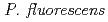 with 2
 M Eu(III) without organic ligands in a 0.1 M NaCl solution containing 3.9 mg
 /L biomass for 1 hour, over 90% Eu(III) was adsorbed on the bacterial cells at pH 4 - 7. Eu(III) adsorption by bacterial cells was depleted at pH 4 - 7 when equimolar EDTA was present, while citric acid and DFO showed less effect on the depletion of Eu(III) adsorption. X-ray photoelectron spectroscopy (XPS) indicated that the adsorbed Eu(III) on cells was covalently bound to carboxyl and/or hydroxyl functional groups of the cell surface. These results suggest that carboxyl and/or hydroxyl functional groups of cell surface show a higher affinity with Eu(III) than citric acid and DFO and have the potential to prevent migration of Eu-organic ligands complexes with low stability constants in environments.
 O/alcohol mixed media by time-resolved laser-induced fluorescence spectroscopy
Arisaka, Makoto*; Kimura, Takaumi; Suganuma, Hideo*; Yoshida, Zenko
Journal of Radioanalytical and Nuclear Chemistry, 255(2), p.385 - 389, 2003/02
Times Cited Count:5 Percentile:35.48(Chemistry, Analytical)no abstracts in English
Arisaka, Makoto*; Kimura, Takaumi; Suganuma, Hideo*; Yoshida, Zenko
Radiochimica Acta, 90(4), p.193 - 197, 2002/05
Times Cited Count:16 Percentile:67.88(Chemistry, Inorganic & Nuclear)no abstracts in English
Takahashi, Yoshio*; Kimura, Takaumi
Bulletin of the Chemical Society of Japan, 74(10), p.1899 - 1900, 2001/10
Times Cited Count:0 Percentile:0.00(Chemistry, Multidisciplinary)no abstracts in English
Arisaka, Makoto*; Kimura, Takaumi; Suganuma, Hideo*; Yoshida, Zenko
Radiochimica Acta, 89(8), p.593 - 598, 2001/08
Times Cited Count:11 Percentile:60.33(Chemistry, Inorganic & Nuclear)no abstracts in English
Nagaishi, Ryuji; Arisaka, Makoto; Kimura, Takaumi; Kitatsuji, Yoshihiro
no journal, ,
In order to elucidate coordination states of europium(III) ion in ionic liquids (ILs) and its physicochemical behavior, spectroscopic and electrochemical properties of Eu(III) were studied as a function of water content in hydrophobic ILs with anion (bis(trifluoromethanesulfonyl)imide = tfsi) and cation (idazolium or ammonium). The luminescence studies indicate that Eu(III) acts spectroscopically as aqua complex in the water-saturated ILs giving 9 of the inner-sphere hydration number of Eu(III), and that at the hydration number  9 tfsi anion involves in asymmetry of the coordination sphere of Eu(III) and in the quenching of photo-excited Eu(III). The electrochemical studies show that the divalent Eu(II) is more stable in the IL than in aqueous solution, and that the motion of Eu(III) is inhibited effectively by the matrix of IL.
