



Initialising ...
Initialising ...
Initialising ...
Initialising ...
Initialising ...
Initialising ...
Initialising ...
Yamanaka, Takamitsu*; Hattori, Takanori
Physics and Chemistry of Minerals, 53(3), p.21_1 - 21_11, 2026/09
Times Cited Count:0 Percentile:0.00(Materials Science, Multidisciplinary)Bulk modulus and electron density distribution of high-pressure polymorphs of Fe-Ti-O minerals (Fe O
 magnetite, Fe
 TiO ulv
 spinel, FeTiO ilmenite, FeTiO
 pseudobrokite) are investigated by X-ray and neutron diffraction. The vacant sites in the unit cell have much larger volumes than cation sites in the all structures. Cation site partly occupied by Ti atom shows a smaller
 than that of only Fe atom and the compressibility of unit cell increases with increasing Ti content. The compressibility of the vacant sites is close to that of unit cells, but are much smaller than that of the cation site. The structure changes such as high-low electron spin transition, Jahn-Teller effect and
 hybridization in the Fe-O bonds are elucidated by present high-pressure experiments. The hybridization in the octahedral cation site was observed by molecular orbital calculation and it brings the deformation of the octahedral cation site, which triggers structure changes in the high-pressure polymorphs.
Collaborative Laboratories for Advanced Decommissioning Science; Institute of Science Tokyo*
JAEA-Review 2025-016, 143 Pages, 2025/10
 JAEA-Review-2025-016.pdf:10.71MB
The Collaborative Laboratories for Advanced Decommissioning Science (CLADS), Japan Atomic Energy Agency (JAEA), had been conducting the Nuclear Energy Science & Technology and Human Resource Development Project (hereafter referred to "the Project") in FY2023. The Project aims to contribute to solving problems in the nuclear energy field represented by the decommissioning of the Fukushima Daiichi Nuclear Power Station (hereafter referred to "1F"), Tokyo Electric Power Company Holdings, Inc. (TEPCO). For this purpose, intelligence was collected from all over the world, and basic research and human resource development were promoted by closely integrating/collaborating knowledge and experiences in various fields beyond the barrier of conventional organizations and research fields. The sponsor of the Project was moved from the Ministry of Education, Culture, Sports, Science and Technology to JAEA since the newly adopted proposals in FY2018. On this occasion, JAEA constructed a new research system where JAEA-academia collaboration is reinforced and medium-to-long term research/development and human resource development contributing to the decommissioning are stably and consecutively implemented. Among the adopted proposals in FY2021, this report summarizes the research results of the "Challenge of novel hybrid-waste-solidification of mobile nuclei generated in Fukushima Nuclear Power Station and establishment of rational disposal concept and its safety assessment" conducted from FY2021 to FY2023. This study aims to establish the rational waste disposal concept of various wastes generated in 1F based on the hybrid-waste-solidification by the Hot Isostatic Press (HIP) method. The ceramics form with target elements, mainly iodine, which is challenging to immobilize, and Minor Actinides such as Am, an alpha emitter and heat source, are HIPed with well-studied materials such as SUS and zircaloy, which make the long-term stability evaluation and safety assessment possible. In 2024, the project's final year, we demonstrated the effectiveness of the hybrid solidification concept by linking all the sub-themes, from waste synthesis to disposal considerations. The compatibility of various wastes, such as ALPS, AREVA sediment wastes, AgI, waste silver adsorbent, ceria adsorbent, and iodine apatite, with metals and oxide matrices was investigated. which involves investigating the HIPed hybrid wastes after exploring the compatibility of various metals and oxide matrices using the rapid sintering method, spark plasma sintering (SPS), proposed in this project. It revealed that hybrid waste solidification with SUS matrix was superior for many wastes. Furthermore, we studied waste disposal concepts based on nuclide migration calculations. Finally, we could connect the waste fabrication to safety assessment for the first time, leading to finding an appropriate waste disposal scenario for 1F decommissioning.
Collaborative Laboratories for Advanced Decommissioning Science; Tokyo Institute of Technology*
JAEA-Review 2024-012, 122 Pages, 2024/09
JAEA-Review-2024-012.pdf:6.31MB
The Collaborative Laboratories for Advanced Decommissioning Science (CLADS), Japan Atomic Energy Agency (JAEA), had been conducting the Nuclear Energy Science & Technology and Human Resource Development Project (hereafter referred to "the Project") in FY2022. The Project aims to contribute to solving problems in the nuclear energy field represented by the decommissioning of the Fukushima Daiichi Nuclear Power Station (hereafter referred to "1F"), Tokyo Electric Power Company Holdings, Inc. (TEPCO). For this purpose, intelligence was collected from all over the world, and basic research and human resource development were promoted by closely integrating/collaborating knowledge and experiences in various fields beyond the barrier of conventional organizations and research fields. The sponsor of the Project was moved from the Ministry of Education, Culture, Sports, Science and Technology to JAEA since the newly adopted proposals in FY2018. On this occasion, JAEA constructed a new research system where JAEA-academia collaboration is reinforced and medium-to-long term research/development and human resource development contributing to the decommissioning are stably and consecutively implemented. Among the adopted proposals in FY2021, this report summarizes the research results of the "Challenge of novel hybrid-waste-solidification of mobile nuclei generated in Fukushima Nuclear Power Station and establishment of rational disposal concept and its safety assessment" conducted in FY2022. The present study aims to establish the rational waste disposal concept of a variety of wastes generated in 1F based on the hybrid-waste-solidification by the Hot Isostatic Press (HIP) method. The ceramics form with target elements, mainly iodine, which is difficult to immobilize, and Minor actinides such as Am, an alphaemitter and heat source, are HIPed with well-studied materials such as SUS and zircaloy, which make the long-term stability evaluation and safety assessment possible.
Collaborative Laboratories for Advanced Decommissioning Science; The University of Tokyo*
JAEA-Review 2024-007, 83 Pages, 2024/06
JAEA-Review-2024-007.pdf:5.56MB
The Collaborative Laboratories for Advanced Decommissioning Science (CLADS), Japan Atomic Energy Agency (JAEA), had been conducting the Nuclear Energy Science & Technology and Human Resource Development Project (hereafter referred to "the Project") in FY2022. The Project aims to contribute to solving problems in the nuclear energy field represented by the decommissioning of the Fukushima Daiichi Nuclear Power Station, Tokyo Electric Power Company Holdings, Inc. (TEPCO). For this purpose, intelligence was collected from all over the world, and basic research and human resource development were promoted by closely integrating/collaborating knowledge and experiences in various fields beyond the barrier of conventional organizations and research fields. The sponsor of the Project was moved from the Ministry of Education, Culture, Sports, Science and Technology to JAEA since the newly adopted proposals in FY2018. On this occasion, JAEA constructed a new research system where JAEA-academia collaboration is reinforced and medium-to-long term research/development and human resource development contributing to the decommissioning are stably and consecutively implemented. Among the adopted proposals in FY2020, this report summarizes the research results of the "Investigation of environment induced property change and cracking behavior in fuel debris" conducted from FY2020 to FY2022. The present study focuses on "metallic debris", which is mainly composed of elements derived from fuel cladding and control rod sheaths. This is the final year of the three years project. The findings on their material properties are as follows. Six phases are precipitated in the metallic debris according to the state diagram of the Zr-Fe-B-C system. Under high-temperature oxidation conditions, an outer film composed mainly of Zr Fe is formed on the surface. An inner layer oxide film is also formed according to the chemical composition of the matrix phase of the debris.
Collaborative Laboratories for Advanced Decommissioning Science; Tokyo Institute of Technology*
JAEA-Review 2022-072, 116 Pages, 2023/03
JAEA-Review-2022-072.pdf:6.32MB
The Collaborative Laboratories for Advanced Decommissioning Science (CLADS), Japan Atomic Energy Agency (JAEA), had been conducting the Nuclear Energy Science & Technology and Human Resource Development Project (hereafter referred to "the Project") in FY2021. The Project aims to contribute to solving problems in the nuclear energy field represented by the decommissioning of the Fukushima Daiichi Nuclear Power Station (1F), Tokyo Electric Power Company Holdings, Inc. (TEPCO). For this purpose, intelligence was collected from all over the world, and basic research and human resource development were promoted by closely integrating/collaborating knowledge and experiences in various fields beyond the barrier of conventional organizations and research fields. The sponsor of the Project was moved from the Ministry of Education, Culture, Sports, Science and Technology to JAEA since the newly adopted proposals in FY2018. On this occasion, JAEA constructed a new research system where JAEA-academia collaboration is reinforced and medium-to-long term research/development and human resource development contributing to the decommissioning are stably and consecutively implemented. Among the adopted proposals in FY2021, this report summarizes the research results of the "Challenge of novel hybrid-waste-solidification of mobile nuclei generated in Fukushima Nuclear Power Station and establishment of rational disposal concept and its safety assessment" conducted in FY2021. The present study aims to establish the rational waste disposal concept of a variety of wastes generated in 1F by the novel hybrid-waste-solidification. The phosphate form of ALPS sediment wastes containing Eu , Ce
 , Sr
 and Cs
 were synthesized as well as radioactive
 Sr,
 Cs and
 I which are both
 emitters, AREVA sludge and Iodine Calcium apatite were synthesized, and they were processed to the stabilization treatment such as sintering and Spark Plasma ...
Sheikh, M. A. R.*; Liu, X.*; Matsumoto, Tatsuya*; Morita, Koji*; Guo, L.*; Suzuki, Toru*; Kamiyama, Kenji
Energies (Internet), 13(19), p.5018_1 - 5018_15, 2020/10
Times Cited Count:14 Percentile:29.84(Energy & Fuels)Ioka, Ikuo; Kuriki, Yoshiro*; Iwatsuki, Jin; Kawai, Daisuke*; Yokota, Hiroki*; Inagaki, Yoshiyuki; Kubo, Shinji
Proceedings of 2020 International Conference on Nuclear Engineering (ICONE 2020) (Internet), 5 Pages, 2020/08
A thermochemical water-splitting iodine-sulfur processes (IS process) is one of candidates for the large-scale production of hydrogen using heat from solar power. Severe corrosive environment which is thermal decomposition of sulfuric acid exists in the IS process. A hybrid material with the corrosion-resistance and the ductility was made by a plasma spraying and laser treatment. The specimen had excellent corrosion resistance in the condition of 95 mass% boiling sulfuric acid. This was attributed to the formation of SiO on the surface. The container using the hybrid material was experimentally made. The pre-oxidized container using hybrid technique was prepared for the corrosion test in boiling sulfuric acid to evaluate the corrosion characteristics of the container. There was no detaching of the surface with the weld part and the R processing. We proposed the calculation method of corrosion rate from the ions dissolved in the sulfuric acid solution after the corrosion test.
Muta, Hiroaki*; Nishikane, Ryoji*; Ando, Yusuke*; Matsunaga, Junji*; Sakamoto, Kan*; Harjo, S.; Kawasaki, Takuro; Oishi, Yuji*; Kurosaki, Ken*; Yamanaka, Shinsuke*
Journal of Nuclear Materials, 500, p.145 - 152, 2018/03
Times Cited Count:26 Percentile:88.52(Materials Science, Multidisciplinary)Kawata, Ryo*; Ohara, Yohei*; Sheikh, Md. A. R.*; Liu, X.*; Matsumoto, Tatsuya*; Morita, Koji*; Guo, L.*; Kamiyama, Kenji; Suzuki, Toru
Proceedings of 17th International Topical Meeting on Nuclear Reactor Thermal Hydraulics (NURETH-17) (USB Flash Drive), 14 Pages, 2017/09
Nagaya, Yasunobu; Adachi, Masaaki*
Proceedings of International Conference on Mathematics & Computational Methods Applied to Nuclear Science & Engineering (M&C 2017) (USB Flash Drive), 6 Pages, 2017/04
MVP is a general-purpose Monte Carlo code for neutron and photon transport calculations based on the continuous-energy method. To speed up the MVP code, hybrid parallelization is applied with a message passing interface library MPI and a shared-memory multiprocessing library OpenMP. The performance test has been done for an eigenvalue calculation of a fast reactor subassembly, a fixed-source calculation of a neutron/photon coupled problem and a PWR full core model. Comparisons has been made for MPI only with 4 processes and hybrid parallelism with 4 processes  3 threads. As a result, the hybrid parallelism yields the reduction of elapsed time by 16% to 34% and the used memories are almost the same.
Toyokawa, Hidenori*; Saji, Choji*; Kawase, Morihiro*; Wu, S.*; Hurukawa, Yukihito*; Kajiwara, Kentaro*; Sato, Masugu*; Hirono, Toko*; Shiro, Ayumi*; Shobu, Takahisa; et al.
Journal of Instrumentation (Internet), 12(1), p.C01044_1 - C01044_7, 2017/01
Times Cited Count:7 Percentile:28.67(Instruments & Instrumentation)We have been developing CdTe pixel detectors combined with a Schottky diode sensor and photon-counting ASICs. The hybrid pixel detector was designed with a pixel size of 200 micro-meter by 200 micro-meter and an area of 19 mm by 20 mm or 38.2 mm by 40.2 mm. The photon-counting ASIC, SP8-04F10K, has a preamplifier, a shaper, 3-level window-type discriminators and a 24-bits counter in each pixel. The single-chip detector with 100 by 95 pixels successfully operated with a photon-counting mode selecting X-ray energy with the window comparator and stable operation was realized at 20 C. We have performed a feasibility study for a white X-ray microbeam experiment. Laue diffraction patterns were measured during the scan of the irradiated position in a silicon steel sample. The grain boundaries were identified by using the differentials between adjacent images at each position.
Awual, M. R.; Miyazaki, Yuji; Taguchi, Tomitsugu; Shiwaku, Hideaki; Yaita, Tsuyoshi
Chemical Engineering Journal, 291, p.128 - 137, 2016/05
Times Cited Count:256 Percentile:99.07(Engineering, Environmental)Awual, M. R.; Yaita, Tsuyoshi; Miyazaki, Yuji; Matsumura, Daiju; Shiwaku, Hideaki; Taguchi, Tomitsugu
Scientific Reports (Internet), 6, p.19937_1 - 19937_10, 2016/01
Times Cited Count:212 Percentile:96.75(Multidisciplinary Sciences) -nonylphenols in water and elimination of their estrogen activities by
 Co -ray irradiation
Kimura, Atsushi; Taguchi, Mitsumasa; Otani, Yoshimi*; Takigami, Machiko; Shimada, Yoshitaka*; Kojima, Takuji; Hiratsuka, Hiroshi*; Namba, Hideki
Radiation Physics and Chemistry, 75(1), p.61 - 69, 2006/01
Times Cited Count:13 Percentile:63.20(Chemistry, Physical)Decomposition of -Nonylphenols (NPs) in water at 1  mol dm
 was decreased exponentially with absorbed dose when NPs were irradiated by Co-rays. Two products having molecular weight of 236, presumably OH adducts of NPs, were detected by LC-MS analyses. The elimination of estrogen activity of aqueous NPs solution including such irradiation products at 5000 Gy (J kg
 ) was confirmed by the yeast two hybrid assay. These results should expand the application of ionizing radiation to the treatment of NPs.
Seki, Masami; Moriyama, Shinichi; Shinozaki, Shinichi; Hasegawa, Koichi; Hiranai, Shinichi; Yokokura, Kenji; Shimono, Mitsugu; Terakado, Masayuki; Fujii, Tsuneyuki
Fusion Engineering and Design, 74(1-4), p.273 - 277, 2005/11
Times Cited Count:3 Percentile:22.93(Nuclear Science & Technology)no abstracts in English
Suzuki, Takahiro; Isayama, Akihiko; Ide, Shunsuke; Fujita, Takaaki; Oikawa, Toshihiro; Sakata, Shinya; Sueoka, Michiharu; Hosoyama, Hiroki*; Seki, Masami; JT-60 Team
AIP Conference Proceedings 787, p.279 - 286, 2005/09
A real-time control system of safety factor (q) profile was developed in JT-60. This system, for the first time, enables 1) real time evaluation of q profile using local magnetic pitch angle measurement by motional Stark effect (MSE) diagnostic and 2) control of current drive (CD) location (rhoCD) by adjusting the parallel refractive index  of lower-hybrid (LH) waves through the change of phase difference (dphi) of LH waves between multi-junction launcher modules. The method for q profile evaluation was newly developed, without time-consuming reconstruction of equilibrium, so that the method requires less computational time. The system evaluates q profile within every 10ms, which is much faster than current relaxation time, typically order of 1s. Safety factor profile by the real-time calculation agreed well with that by equilibrium reconstruction with MSE. From temporal evolution of q (or current) profile, we evaluate CD location in real-time, too. The control system controls rhoCD through (or directly dphi) in such a way to minimize difference between the real-time evaluated q profile and its reference profile. The real-time control system was applied to positive shear plasmas (
 ), having plasma current of 0.6MA, toroidal field of 2.3T, and electron density of
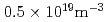 . In order to keep good coupling of LH waves to the plasma, gap between the launcher and the plasma surface was controlled to about 0.1m. The reference q profile was set to q(0)=1.3. The real-time q profile approached to the reference after application of real-time control; the controlled q profile was sustained for 3s, which was limited by injected LH power. RF experiments in JT-60U, such as stabilization of neo-classical tearing modes, plasma startup experiments, etc., are also presented.
Suzuki, Takayoshi*
JAERI-Review 2005-030, 37 Pages, 2005/08
JAERI-Review-2005-030.pdf:2.28MB
Although energy consumption in the industry sector has almost been stable, energy consumption in the transportation (passenger and freight) sector has increased after the oil crisis. The increase of energy consumption in passenger sector can be attributed to the increase in transportation by private passenger vehicles; while the increase in freight sector was due to the modal shift to trucks. Among transportation methods, automobiles are now dominant in terms of energy consumption and also in terms of amount of transportation. Therefore implementing energy conservation measures relating to automobiles is very important in order to suppress the energy consumption in transportation. This report summarizes the results of investigation on energy conservation measures, especially relevant to automobiles. The investigation has shown that most promising and effective technologies or measures are promoting market penetration of vehicles satisfying "top runner standard", development and employment of hybrid vehicles, and introduction of vehicles with "idling-stop" systems.
Goniche, M.*; Kazarian, F.*; Bibet, P.*; Maebara, Sunao; Seki, Masami; Ikeda, Yoshitaka; Imai, Tsuyoshi*
Journal of Vacuum Science and Technology A, 23(1), p.55 - 65, 2005/01
Times Cited Count:2 Percentile:8.90(Materials Science, Coatings & Films)Outgassing rates have been measured for long duration (100-4700 seconds) of RF transmission at high power density (50-200 MW/m ) for waveguides made of OFHC copper, dispersoid copper, copper-coated carbon fiber composite and copper-coated graphite. The measurements were performed on multi-waveguide(2 to 8)mockups, using a test bed facility equipped with a 3.7 GHz klystron. The effect on the outgassing rate of waveguide surface temperature and of initial wall gas loading('conditioning'), is examined. It is concluded that an outgassing rate of 110
 Pam
 sm
 and 510 Pamsm at 300C and 400C respectively, can be expected for the tested material. Based on these measurement results, it is further concluded that no additional pumping will be needed for the LHRF antenna proposed for ITER.
Shimada, Michiya; Campbell, D.*; Stambaugh, R.*; Polevoi, A. R.*; Mukhovatov, V.*; Asakura, Nobuyuki; Costley, A. E.*; Donn , A. J. H.*; Doyle, E. J.*; Federici, G.*; et al.
Proceedings of 20th IAEA Fusion Energy Conference (FEC 2004) (CD-ROM), 8 Pages, 2004/11
This paper summarises recent progress in the physics basis and its impact on the expected performance of ITER. Significant progress has been made in many outstanding issues and in the development of hybrid and steady state operation scenarios, leading to increased confidence of achieving ITER's goals. Experiments show that tailoring the current profile can improve confinement over the standard H-mode and allow an increase in beta up to the no-wall limit at safety factors  4. Extrapolation to ITER suggests that at the reduced plasma current of 12MA, high Q
 10 and long pulse (1000 s) operation is possible with benign ELMs. Analysis of disruption scenarios has been performed based on guidelines on current quench rates and halo currents, derived from the experimental database. With conservative assumptions, estimated electromagnetic forces on the in-vessel components are below the design target values, confirming the robustness of the ITER design against disruption forces.
 Domin and
 L., obtained by crossing with pollen exposed to helium ion beams or -rays
Kitamura, Satoshi; Inoue, Masayoshi*; Omido, Nobuko*; Fukui, Kiichi*; Tanaka, Atsushi
Nuclear Instruments and Methods in Physics Research B, 206, p.548 - 552, 2003/05
Times Cited Count:8 Percentile:49.14(Instruments & Instrumentation)no abstracts in English
